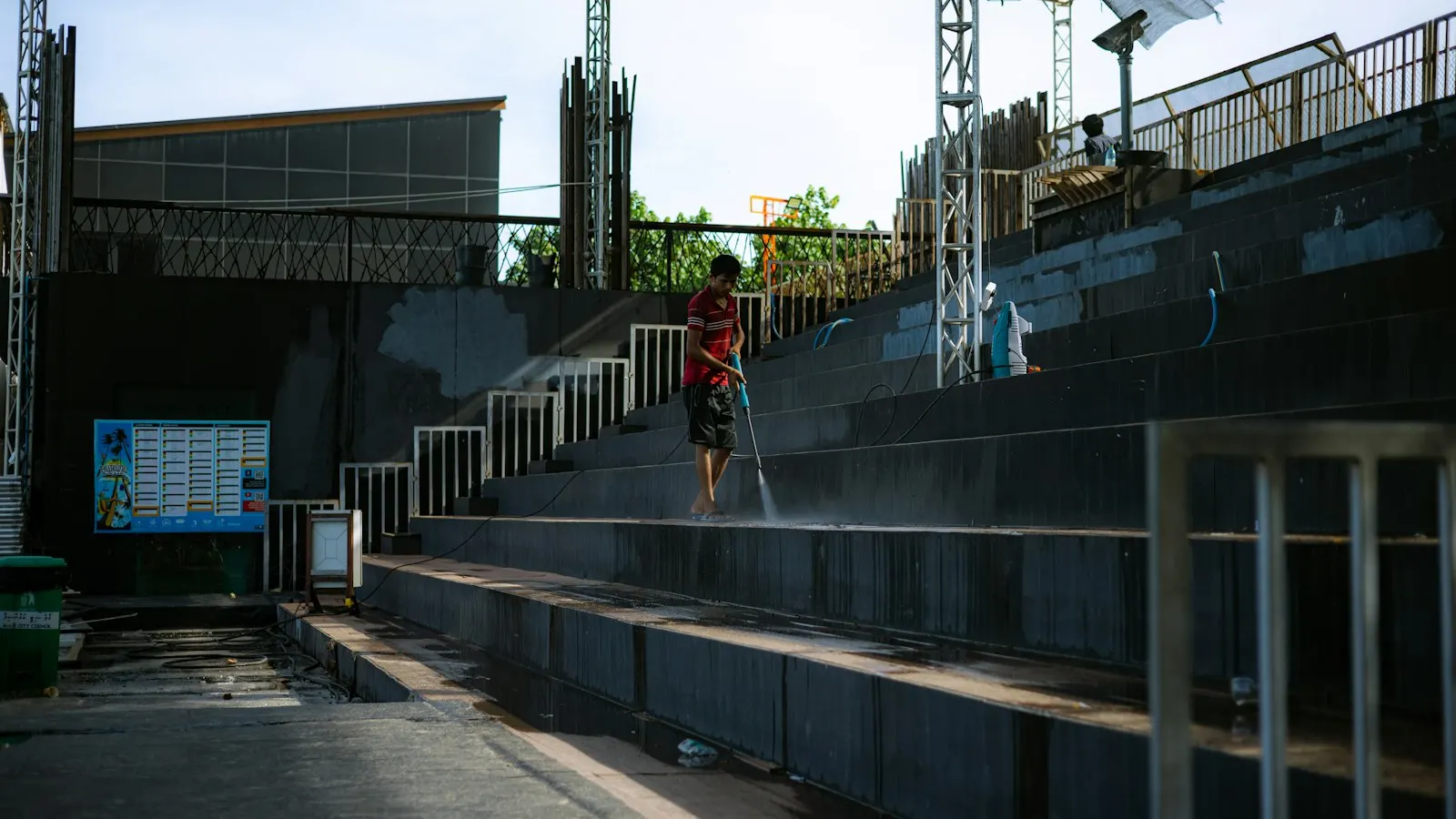
The Latrobe Valley’s damp winters, frequent fogs and shaded southern sides of houses make outdoor surfaces green and slippery. Moss and algae grow on paths, driveways, decks and steps, especially in the cooler months. Concrete darkens with grime and tyre marks, and pavers sprout weeds in the joints. Besides looking tired, slippery surfaces are a real fall risk, especially for older people and children.
We pressure wash driveways, paths, patios, decks, fences and outdoor areas at homes, rentals and small businesses across Traralgon, Morwell, Moe, Newborough, Churchill and surrounding towns. We use the right pressure and technique for each surface, so it comes up clean without damage.
Surfaces we clean
Concrete driveways and paths
Concrete handles high pressure well. We use a rotary surface cleaner for even, streak-free results on large flat areas, then edge and detail by hand. Oil stains and tyre marks are pre-treated with a degreaser; old oil stains may lighten but not fully disappear.
Pavers
Brick, concrete and stone pavers clean up well but need care around the joints. High pressure blows out the sand between pavers, which loosens them and lets weeds back in. We use moderate pressure and, where needed, re-sand the joints afterwards with paving sand or polymeric sand to help resist weeds.
Exposed aggregate and coloured concrete
Exposed aggregate and coloured or stencilled concrete are usually sealed. Too much pressure can strip the sealer and loosen stones. We use lower pressure and can advise on resealing, which is a specialist job we can refer.
Timber decks
Timber is soft and easily damaged by high pressure, which raises the grain and leaves fuzzy, furred surfaces and lap marks. We use low pressure with a wide fan, work along the grain and use a timber deck cleaner where needed. After cleaning, timber decks need to dry before oiling. See deck and pergola repairs.
Composite decking
Composite boards need gentle cleaning according to the manufacturer’s instructions, often a soft brush and low pressure.
Fences
Colorbond fences clean easily with low pressure and a mild detergent. Timber fences need low pressure along the grain. Brick and rendered fences need care to avoid damaging mortar and render.
Patios, alfresco areas and pool surrounds
Tiled patios, alfresco areas and pool surrounds collect grime and algae. We clean tiles and grout lines and rinse thoroughly. Some tiles become slippery when wet, so we can advise on anti-slip treatments.
Retaining walls, steps and garden edges
Brick, block and sleeper retaining walls, outdoor steps and garden edging are cleaned at an appropriate pressure.
Bins and bin areas
Bin storage areas get grimy and smelly. We clean the bin pad and bins.
What we do not pressure wash
- Roofs. Walking on roofs to pressure wash them is a fall risk, and high pressure can damage tiles, pointing and sheeting and force water under them. Roof cleaning should be done by a specialist roofing contractor.
- Weatherboards and render walls with high pressure, which can force water behind cladding and damage paint. We use a soft wash for walls where suitable.
- Old fibre cement or any material that may contain asbestos. Pressure washing asbestos cement sheeting, roofs or fences releases fibres and is prohibited or tightly controlled under Victorian rules. Many older homes and fences in the Valley have fibro or asbestos cement; we will not pressure wash it.
- Windows and screens, which are easily damaged.
- Painted surfaces in poor condition, where pressure will strip paint (unless that’s the aim, as preparation for repainting).
Our process
1. Inspect. We check the surface type, condition, drainage and anything nearby that needs protecting, such as plants, cars and windows.
2. Pre-treat. Moss, mould, algae and oil stains get a suitable cleaning solution where needed, applied and left to work.
3. Clean. We use the right pressure and nozzle for the surface, or a surface cleaner for large flat areas.
4. Rinse. Debris is rinsed off, and paths and walls nearby are cleaned of splatter.
5. Finish. Joints are re-sanded where needed, and we tidy up.
Water use and runoff
Pressure washing uses less water than a garden hose for the same area. We avoid washing dirty water, detergents and debris into the stormwater drain where possible, because stormwater flows untreated into local creeks and the Latrobe River. We use biodegradable cleaning products and direct runoff onto lawns and garden beds where suitable.
When to pressure wash
Late spring and summer are popular for outdoor cleaning before entertaining season. But in the Latrobe Valley, cleaning in late autumn can also make a big difference to safety, by removing slime and moss before winter rain makes surfaces slippery. Many people clean twice a year: once before winter and once before summer.
Pressure washing for sale or lease
A clean driveway, front path and porch make a strong first impression for buyers and tenants. Pressure washing is one of the most effective preparations for a sale, and it photographs well. For rentals, cleaning the outdoor areas between tenants keeps the property looking cared for.
Moss and slippery paths: a safety issue
The shady southern side of a house, under trees and along fence lines are where moss and algae build up first. Slippery paths and steps are a common cause of falls, particularly for older people. If you are organising help for an older parent in Moe, Morwell or Traralgon, cleaning the paths and steps before winter is a worthwhile job. We can also fit non-slip strips to steps, and hand rails where needed. See grab rails and home safety.
Areas we cover
Pressure washing across Traralgon, Morwell, Moe, Newborough, Churchill, Yallourn North, Glengarry, Tyers, Traralgon South and Hazelwood North.
Combining with other jobs
Pressure washing is often booked with:
- Gutter cleaning
- Deck oiling and repairs
- Fence repairs; see fence repairs and gates
- Garden tidy-ups and green waste removal; see odd jobs and rubbish removal
Pressure vs soft washing
Not everything should be blasted. Pressure washing uses high water pressure to remove dirt mechanically. It suits concrete, hard pavers and stone. Soft washing uses low pressure, about the same as a garden hose, combined with cleaning solutions that kill and loosen mould, moss and algae, which are then rinsed away. Soft washing suits timber, painted surfaces, render, weatherboards, Colorbond and anywhere high pressure could cause damage. Many jobs use both: a soft wash on the walls and fence, and a pressure clean on the driveway and paths. Soft washing also tends to give longer-lasting results on organic growth, because it kills the spores rather than just removing the visible growth.
Why some surfaces go green again quickly
If a path goes green again within months, the conditions are right for growth: shade, poor drainage, constant damp and organic matter such as leaves. Some practical changes help:
- Trim overhanging trees and shrubs to let in more sun and air.
- Fix leaking downpipes, gutters and taps that keep the surface wet.
- Sweep leaves and debris off regularly.
- Improve drainage so water doesn’t pool on the surface.
- Apply a moss and algae treatment after cleaning, following the label.
- Seal porous concrete and pavers, which makes them easier to keep clean.
Rural and lifestyle properties
Properties around Tyers, Glengarry, Traralgon South and Hazelwood North often have long driveways, sheds, concrete aprons, stockyards and outdoor areas. We clean shed aprons, verandahs, outdoor entertaining areas and concrete paths around the house. Large rural driveways and farm infrastructure may need specialist equipment, and we will let you know what is practical.

Commercial pressure washing
We clean shopfront footpaths, entries, staff areas, bin areas and outdoor seating for small businesses, cafes and offices in Traralgon, Morwell and Moe, and can work early or after hours to avoid disruption. See our commercial handyman page.
Preparing surfaces for painting or sealing
Pressure washing is also preparation work. Before staining a fence, oiling a deck, painting a Colorbond fence or sealing a concrete driveway, the surface needs to be clean and free of mould, dust and loose material. We can clean the surface and then complete the painting or oiling once it has dried, or prepare it for a specialist sealer.
What you need to do before we arrive
- Move cars, bins, pot plants, outdoor furniture and toys off the area.
- Close windows and doors nearby.
- Let us know where the outdoor taps are and whether the water pressure is good.
- Tell us about any loose pavers, cracked concrete or delicate plants.
- Keep pets inside during the clean.
Getting a quote
Email photos of the areas, rough sizes, the surface type and any problem stains. We will reply with a clear scope and quote.
Concrete sealing after cleaning
Plain concrete is porous, so it absorbs oil, rust and organic stains, and moss roots into the surface. A penetrating or film-forming sealer applied after a thorough clean makes concrete easier to keep clean and slows the return of moss. Sealers need the concrete to be completely dry, often for a day or more after washing, and need suitable weather, which in the Valley means a dry spell in the warmer months. Some sealers also darken the surface or add a slight sheen, so test a small area first. For coloured, stencilled and exposed aggregate concrete, resealing is a specialist job we can refer.
Tyre marks and rust stains
Hot tyre marks on driveways, especially from newer cars on warm days, are a plasticiser residue and need a specialist cleaner rather than pressure alone. Rust stains from garden furniture, pot plants and bore water need a suitable rust remover before washing. We’ll test products on a small area first, because some can lighten or etch the surface.
Leaf stains from eucalypts and liquidambars on pale concrete usually fade after a clean and a few weeks of sunlight.
Frequently asked questions
Do you pressure wash roofs?
No. Roof cleaning is a fall risk and can damage roofs, so we refer it to roofing specialists.
Will pressure washing damage my deck?
Not when done correctly. We use low pressure along the grain and a deck cleaner.
Can you remove oil stains?
We pre-treat and clean them. Fresh stains often lift well; old stains usually lighten but may not disappear.
Will you wash debris into the drain?
We avoid it where possible, use biodegradable products and direct runoff onto garden areas.
Do you clean asbestos fences?
No. Pressure washing asbestos cement is prohibited or tightly controlled, and we won’t do it.
Do pavers need re-sanding?
Often yes after cleaning. We can re-sand joints to keep them stable and reduce weeds.
Get a free quote
Send us your list of jobs, your suburb and a few photos. We will reply with a clear written scope and a free, no-obligation quote.
Get a free quote